
If your posts are getting views but not conversations, likes, shares, or clicks—you’re not alone. Low social media engagement is one of the most common growth blockers for brands. The good news? It’s measurable, fixable, and scalable—when you focus on the right social media engagement metrics and a people-first strategy.
This guide explains why engagement drops, which metrics matter, and how a proven social media engagement strategy can turn passive audiences into active customers—while aligning with Google’s December 2025 Core Update expectations (EEAT, helpful content, and intent-led SEO).
Why Low Engagement Hurts More Than You Think
Low engagement isn’t just a vanity issue—it directly impacts:
- Organic reach (algorithms reward interaction)
- Brand trust & authority
- Website traffic and conversions
- Paid campaign efficiency
- Long-term SEO visibility
In short: if people don’t engage, platforms—and search engines—assume your content isn’t helpful.
Social Media Engagement Metrics That Actually Matter

Many brands track numbers but miss insights. To improve results, you must analyze social media engagement metrics that reflect real user intent—not just surface-level activity.
Core Metrics You Should Track
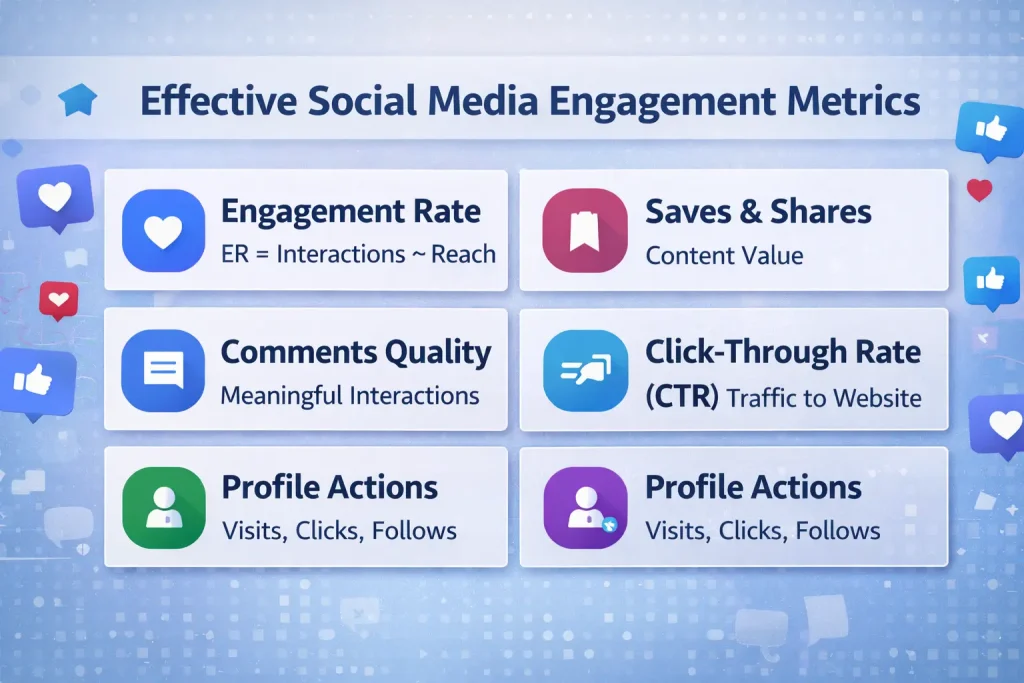
- Engagement Rate (ER) – Interactions ÷ Reach (true content quality signal)
- Saves & Shares – Strong indicators of content usefulness
- Comments Quality – Conversation depth > comment count
- Profile Actions – Visits, follows, link clicks
- Click-Through Rate (CTR) – Bridge between social and website conversions
- Time-Based Engagement – How quickly users interact after posting
When these metrics improve together, platforms reward your content with greater visibility—and users reward you with trust.
Why Engagement Drops (Real-World Reasons)
Low engagement is rarely about “posting less.” Common causes include:
- Content not aligned with audience intent
- Over-promotional messaging
- Weak storytelling or visual hierarchy
- No clear CTA (call-to-action)
- Inconsistent posting cadence
- Ignoring platform-native formats (Reels, Shorts, Carousels)
- No data-driven optimization
A successful social media engagement strategy fixes these at the system level—not post by post.
A High-Impact Social Media Engagement Strategy (2026-Ready)
To meet EEAT and people-first standards, engagement strategies must be experience-led, data-backed, and conversion-focused.
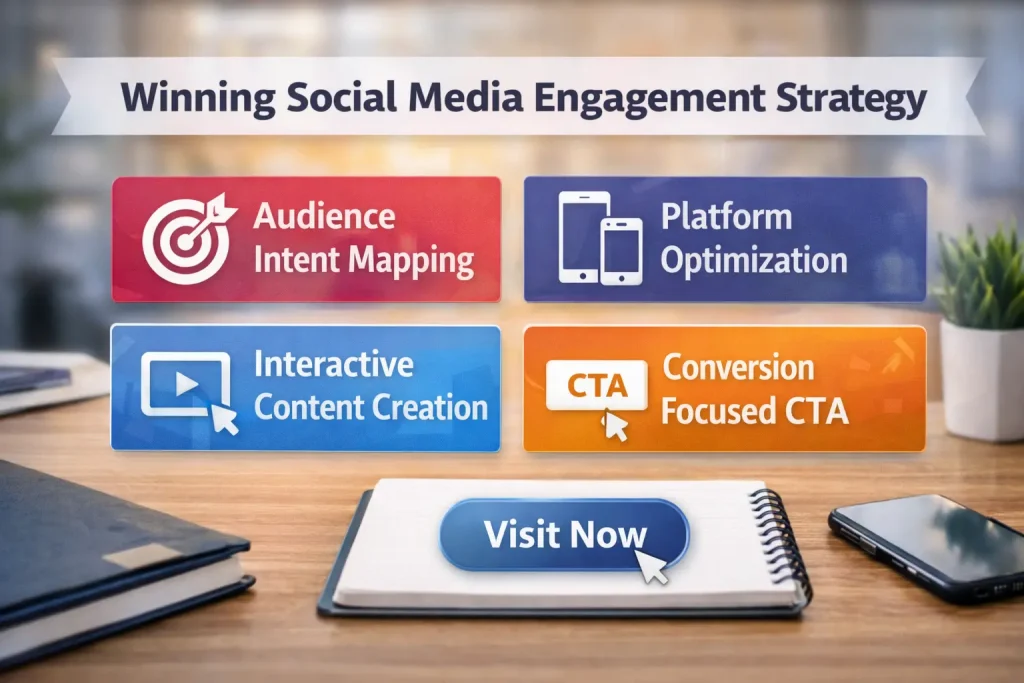
1. Audience Intent Mapping
We align content with:
- Awareness (education, insights)
- Consideration (comparisons, case examples)
- Conversion (proof, testimonials, CTAs)
2. Platform-Specific Optimization
What works on Instagram rarely works on LinkedIn. Each platform needs:
- Native content formats
- Optimal post timing
- Algorithm-aligned hooks (first 3 seconds / first 2 lines)
3. Content That Earns Interaction
- Problem–solution storytelling
- Short-form educational content
- Visual-first carousels
- Community-driven questions & polls
4. Conversion-Centered UX
Engagement without direction is wasted attention. Every post should guide users to:
- Visit your profile
- Click your website
- Start a conversation
- Save or share
5. Continuous Metrics Optimization
We monitor and refine based on social media engagement metrics, not assumptions.
Social Media Engagement Services That Go Beyond Posting
Most agencies post content. Few engineer engagement.
At https://vinodsingh.me, social media engagement services are designed for measurable growth, not vanity metrics.
What Makes These Services Different?
- Strategy-first (not template-based)
- Metrics-driven decision making
- SEO + social alignment
- Conversion-focused content
- Clear reporting & ROI tracking
Ideal For:
- Businesses with stagnant growth
- Brands losing organic reach
- Service providers needing qualified leads
- Companies preparing for long-term SEO authority
How Better Engagement Supports SEO & Google’s Core Updates
Google increasingly evaluates:
- Brand trust signals
- User interaction & behavior
- Content usefulness across channels
High social media engagement reinforces:
- Brand authority (EEAT)
- Content relevance
- Branded search growth
- Referral traffic quality
This makes your social presence a ranking asset, not just a marketing channel.
Final Thought: Engagement Is a System, Not a Tactic
If your social media feels busy but ineffective, the issue isn’t effort—it’s strategy.
A focused approach to social media engagement, guided by the right social media engagement metrics and executed through a clear social media engagement strategy, can turn platforms into predictable growth channels.
👉 If you’re ready to fix low engagement with a data-driven, conversion-focused approach, explore proven solutions at
Vinod Singh Digital Marketing Solutions
Because engagement should lead to growth—not just likes.
Trusted by global clients
Leave a Reply